Showing posts with label race. Show all posts

Monday, November 9, 2015

Change but not Changing: A Ferguson Challenge

The other day, I came across a two-frame comic. In the first frame is a politician like figure standing at a podium in front of a happy crowd of people each with one hand raised as the politician asks, "Who wants change?"

In the second frame, it's the same scene, but the politician asks, "Who wants to change?" No hands are raised. No one looks at the politician or one another.

Everyone wants change, but no one wants to change.

The idea, the need, the desire for change was readily apparent during the recent Episcopal Church Young Adult Pilgrimage to Ferguson, Missouri. Twenty-four other young adults and I, 6-8 staff, and countless guest speakers, engaged in conversations about racial justice and reconciliation. Indeed, during the pilgrimage we met with many inspiring agents of change. But what was also apparent, especially in looking out from Ferguson, is a lack of will to change. We want change, but we're not changing.

Saturday, June 7, 2014

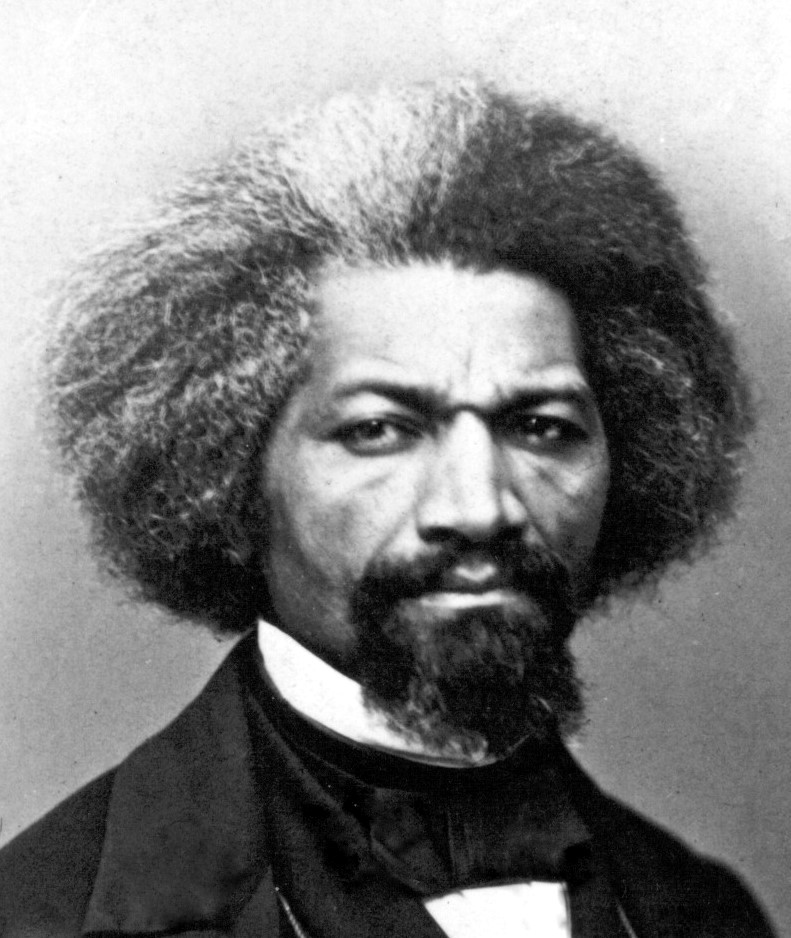
Frederick Douglass on Haiti

This post may be a bit nerdy, but I want to share this anyway. I am exploring more literature and writings on Haiti by Haitians and non-Haitians. In one way or another, Haiti has influenced many high profile historical figures around the world, and many of them have had something to say about it.
Frederick Douglass, and American, worked in various capacities on the relationship between Haiti and the U.S., including delivering a speech at the Chicago World's Fair on January 2nd, 1893. Here's a link to the text of that wonderful speech. He is as eloquent as ever, and does not shy away from being direct to his purpose and object.

Because of the similarities I see to present day, it is amazing to me that this was delivered in 1893. Awesome insight into history, Haiti, and the relationship with the U.S. To me, this speech shows very clearly how the history of the U.S. is inseparable from the history of Haiti. I think it's worth the 30-45 minutes it takes to read it.

http://www2.webster.edu/~corbetre/haiti/history/1844-1915/douglass.htm

Here's my favorite quote from the piece:

Until she spoke no Christian nation had abolished negro slavery. Until she spoke no christian nation had given to the world an organized effort to abolish slavery. Until she spoke the slave ship, followed by hungry sharks, greedy to devour the dead and dying slaves flung overboard to feed them, plouged in peace the South Atlantic painting the sea with the Negro's blood. Until she spoke, the slave trade was sanctioned by all the Christian nations of the world, and our land of liberty and light included. Men made fortunes by this infernal traffic, and were esteemed as good Christians, and the standing types and representations of the Saviour of the World. Until Haiti spoke, the church was silent, and the pulpit was dumb. Slavetraders lived and slave-traders died. Funeral sermons were preached over them, and of them it was said that they died in the triumphs of the christian faith and went to heaven among the just.

Friday, May 23, 2014

Voluntourism, Poverty Tourism, Mission Trips, Oh My!

Simply by reading this post and the linked articles, you will have contributed one of the best things you could contribute to the mission here with the Episcopal Church in Cange, Haiti. Please read it.

This post is a collection of articles that discuss the positives and negatives of volunteer trips, the issues of voluntourism, and some suggestions on how to improve on this phenomenon.

The issues these articles address lead me to question the sincerity of human good will, the limits of commitment, and virtue of selfishness. It is my hope that by sharing these articles, I will push you as I am being pushed to consider the broader context in which we live, work, travel and volunteer--not only in places abroad, but in our own neighborhoods and towns.